
How to Map BPMN Patterns and Examples into Tallyfy
BPMN worked for factory-era workflows but fails modern team work requiring flexibility and mobile access. It solves documentation not improvement, cannot handle exceptions, and isn't truly standardized. Tallyfy replaces legacy BPMN with a modern approach built for anyone including clients, focusing on making processes easy to follow rather than perfect to diagram.
Summary
- BPMN worked for factories, not modern teams - Built for 18th century factory work, BPMN fails when workers need flexibility, mobile access, and the ability to handle exceptions that rigid flowcharts cannot anticipate
- Documentation does not equal improvement - BPMN solves process documentation but makes actual change hard, requiring specialists to redraw diagrams for small modifications instead of letting people doing the work improve it in real-time
- Tallyfy replicates all BPMN patterns with modern simplicity - Every common BPMN pattern (sequence, parallel split, exclusive choice, tiered approval) has a Tallyfy equivalent that works on phones and can be exposed to clients, not just internal process experts
- Need help moving beyond legacy BPM? See how Tallyfy modernizes workflow management
First - let’s get some context.
BPMN is used by legacy BPM software tools. In today’s age, it’s a great idea to start moving away from BPMN for these very compelling reasons:
BPMN is not for modern work. BPMN worked when everyone was in a factory in the 18th century. These days, most workers are team workers - which explains the gigantic explosion of communication and collaboration tools in the workplace. People want something that’s structured, but less rigorous. If you pay someone a six-digit salary - do you expect them to follow flowcharts?
BPMN cannot deal with every possible scenario. With BPMN it’s hard to deal with every possible exception/deviation from the “normal way”. With Tallyfy - you can use comments and report issues - to cater for scenarios which nobody anticipated before.
BPMN is not for modern devices and systems. If you’re using BPMN to publish process maps - it became obsolete when smartphones came out. Nobody is going to refer to a large, complicated diagram that could barely fit on an A2-size sheet of paper, let alone a 6-inch phone screen.
BPMN solves process documentation - not process improvement. If you want to go from as-is into a to-be process situation, you need think practically. How can you make change, training and improvement in a process easy? Also - how can you involve the people who actually do the process to improve it? BPMN requires re-doing a process model, just to make a small change - which is often just for people who know BPMN. Tallyfy has built the simplest solution imaginable for getting real-time process feedback from the field.
BPMN cannot be exposed to your client. No customer or client wants to see your complex, beautiful BPMN diagram. Customers care about a better customer experience. Tallyfy focuses on making processes so easy - that you can even share your process with your customer. In contrast - BPMN is mostly focused on automating internal, repeatable processes.
BPMN does not make following a process easy. BPMN, while being formal and proper - does not solve the actual problem at work. The reason you map a process is so that people can follow it easily. BPMN is really for documentation. Real-life is usually totally different. Why invest in mapping via BPMN - when you know nobody will follow the process in real-life?
BPMN is not really a standard. Although it’s supposed to be a standard - many vendors create their own “flavor” of BPMN making migration between vendors a non-trivial task.
There’s some things BPMN cannot do at all - things that only Tallyfy can do. Read more about that here
If you already use BPMN or are familiar with it - this guide was for you.
Tallyfy is the new way to map, track and improve processes. It’s built for anyone (including clients) - not just for process improvement professionals, IT staff or business analysts.
This articles defines known/common patterns in BPMN from legacy BPM tools. For each BPMN pattern, we’ve defined a Tallyfy equivalent that’s fit for modern work.
Sequence
BPMN pattern description
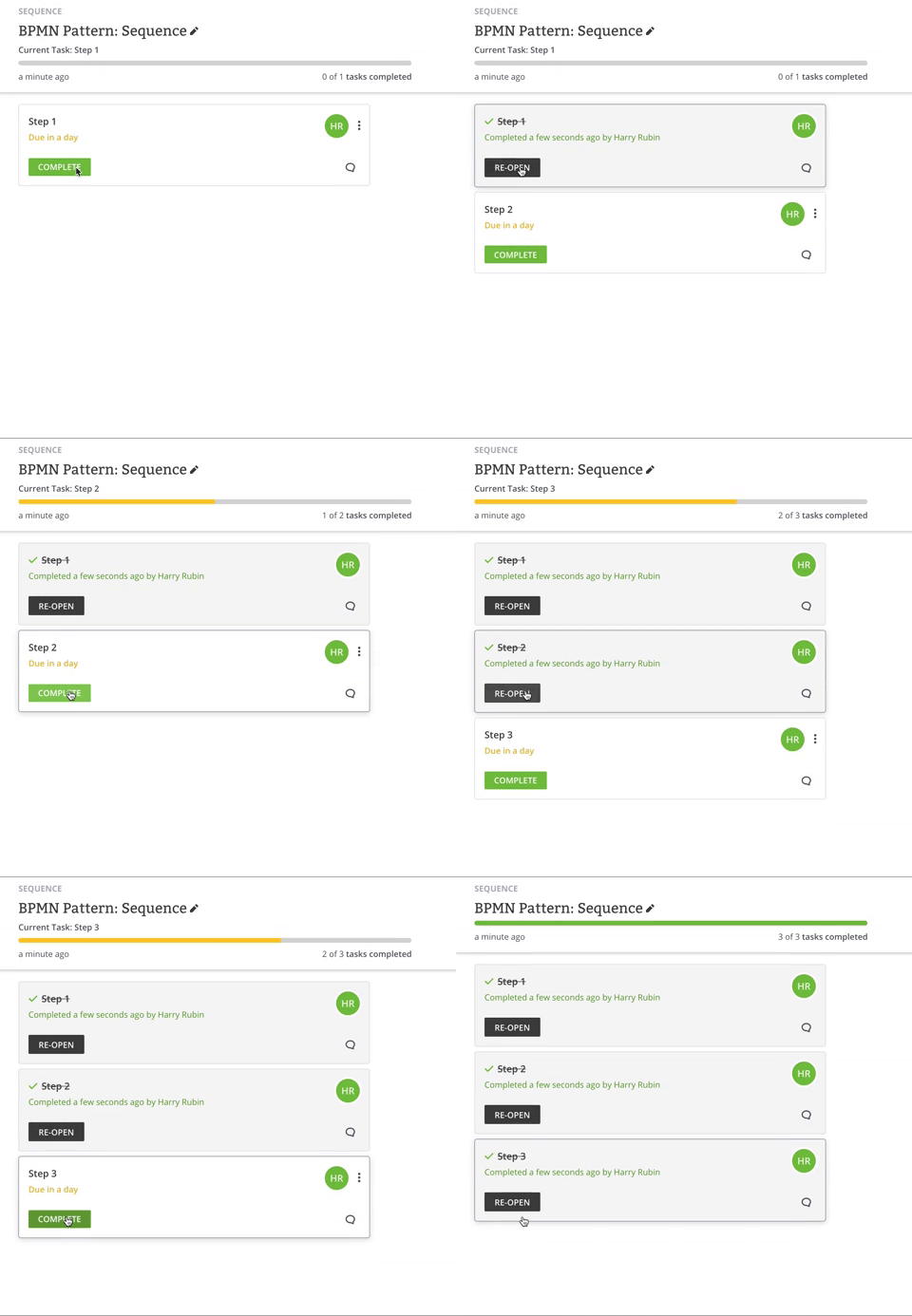
Task A, B, and C are completed in order.

Equivalent of pattern in Tallyfy
Once task A is completed, show task B.
Once task B is completed, show/assign task C.
Parallel Split
BPMN pattern description
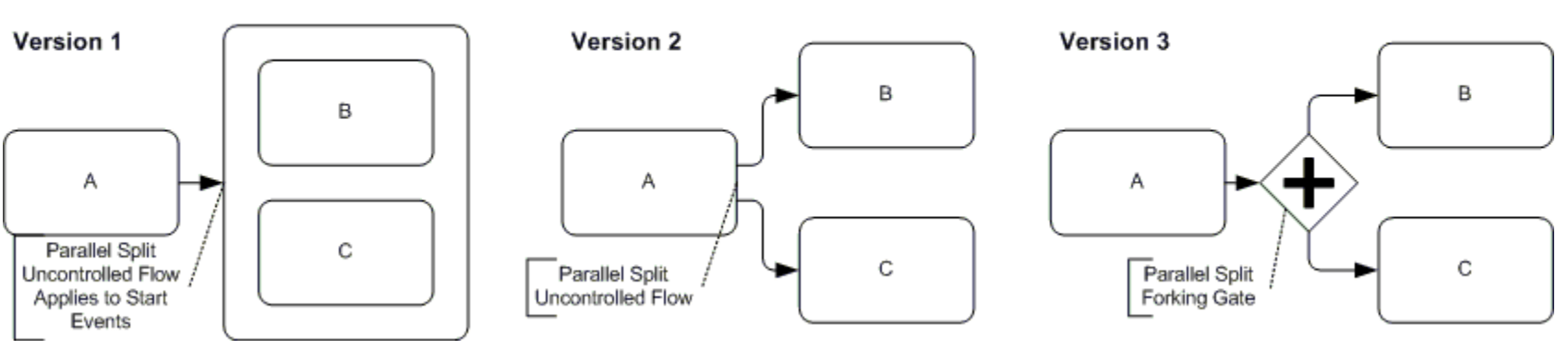
After task A is completed, tasks B and C are to be completed concurrently.
(V1) B and C are to be completed together. (V2) B and C are to be completed.
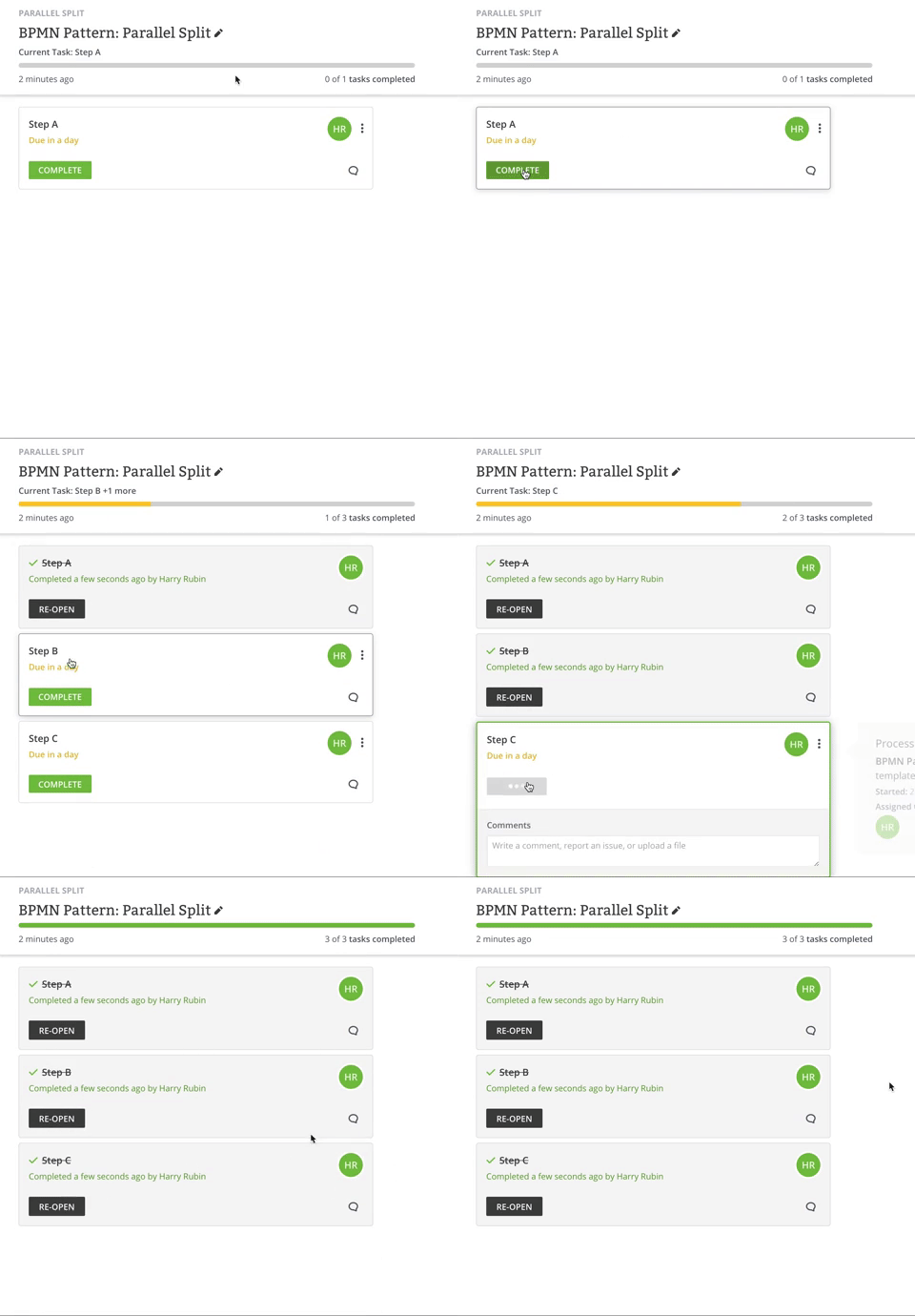
Equivalent of pattern in Tallyfy
Once task A is completed, show/assign task B and C.
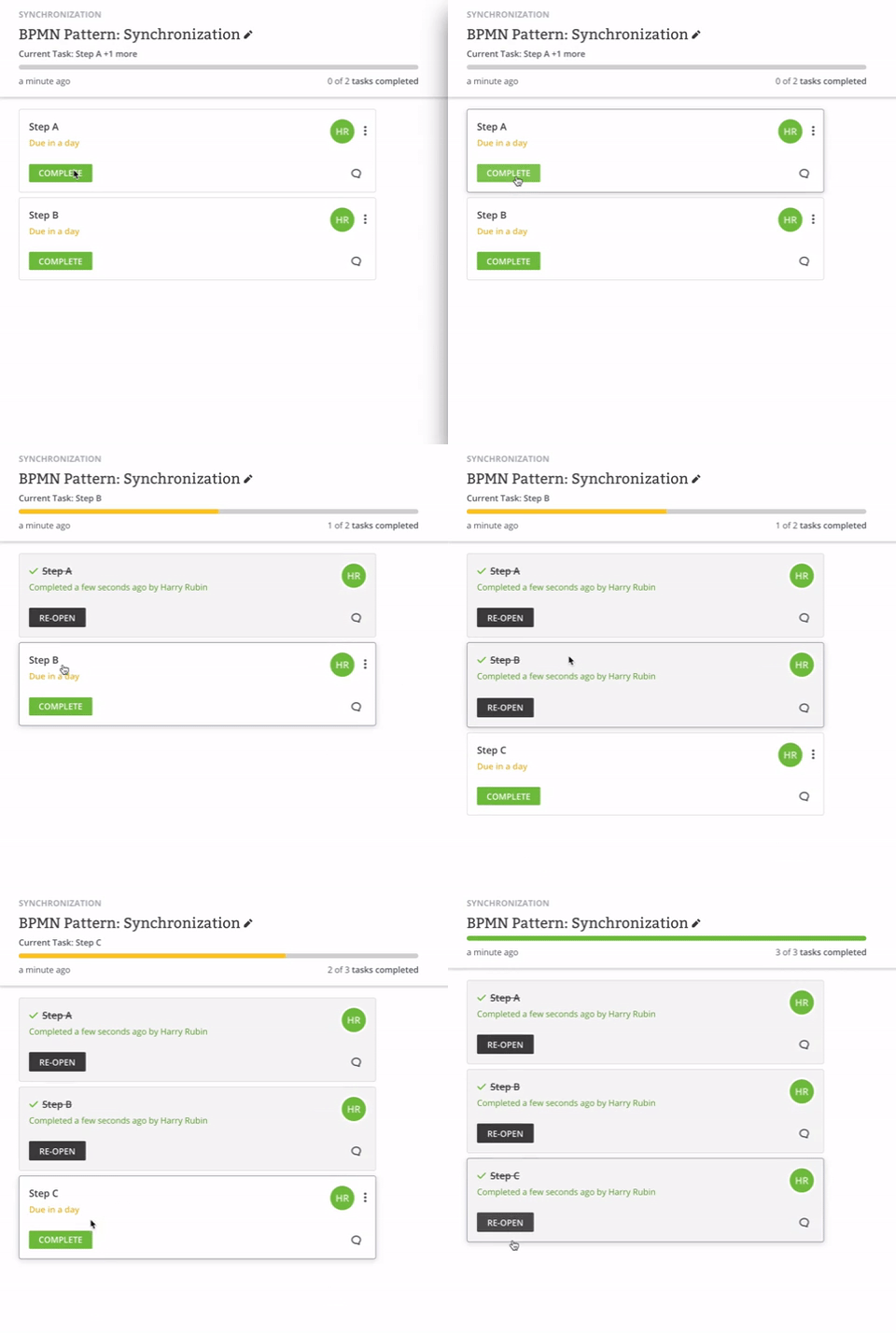
Synchronization
BPMN pattern description
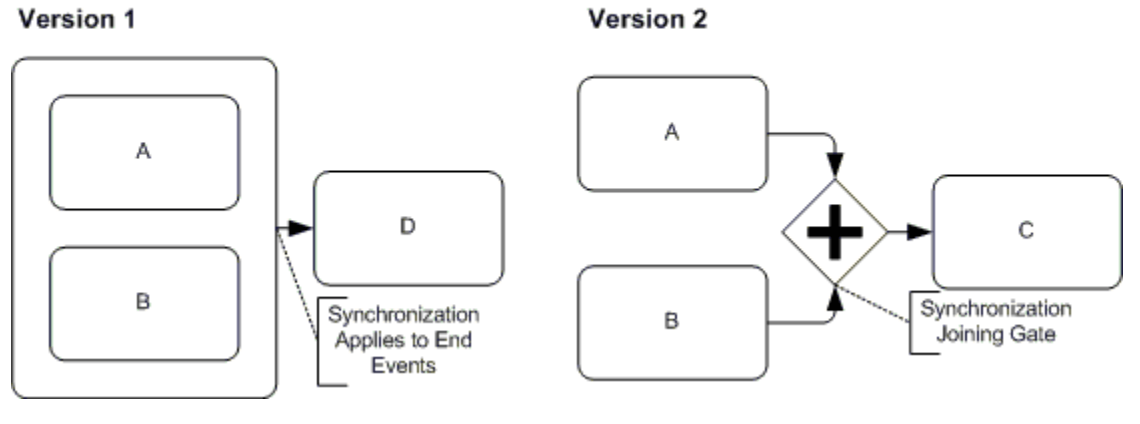
After task A and B are completed, task C/D is to be completed.
(V1) once both A and B are completed together; (V2) once A and B are both independently completed.
Equivalent of pattern in Tallyfy
Once task A and B are completed, show/assign task C/D.
Exclusive Choice
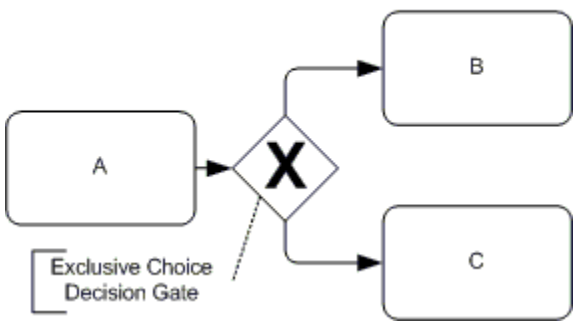
BPMN pattern description
Depending on information gathered in task A, either task B or C is to be completed.
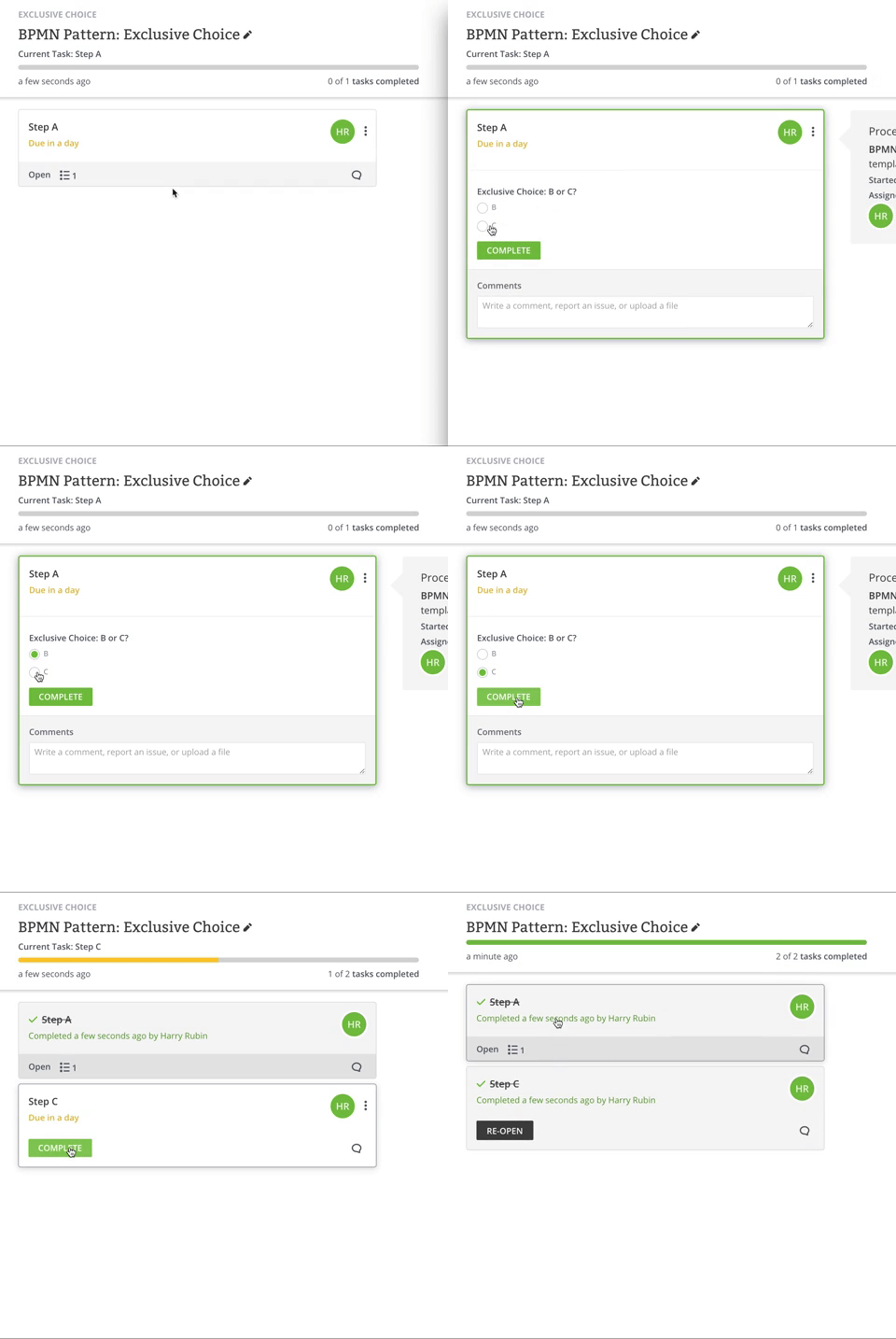
Equivalent of pattern in Tallyfy
If task A contains information X, task B is to be completed.
If task A does not contain X, task C is to be completed.
Simple Merge
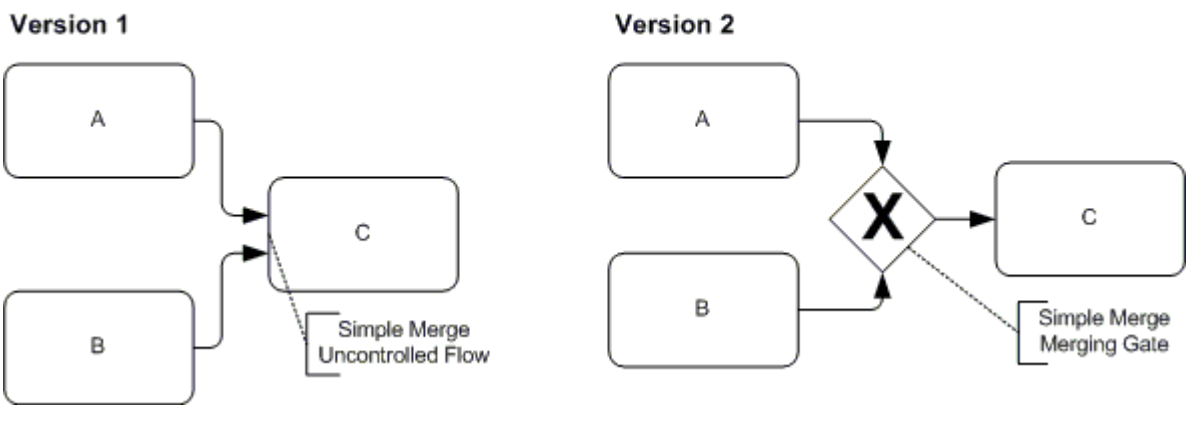
BPMN pattern description
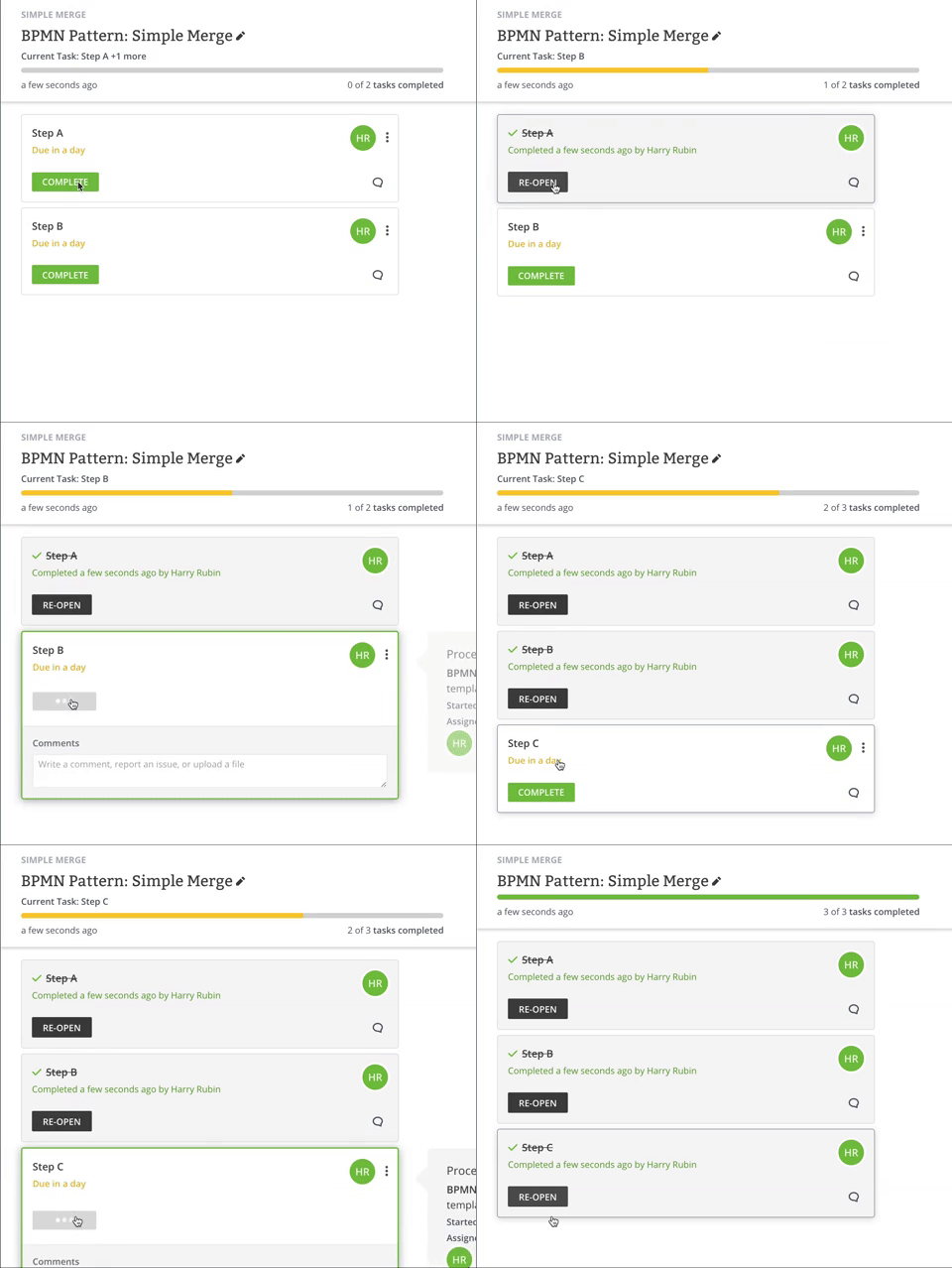
After task A and B are completed, task C is to be completed.
(V2) Task C can only be started once both A and B are completed.
Equivalent of pattern in Tallyfy
(V1) Once task A and B are completed, show task C.
(V2) Once A or B is completed show C.
Multi-Choice
BPMN pattern description
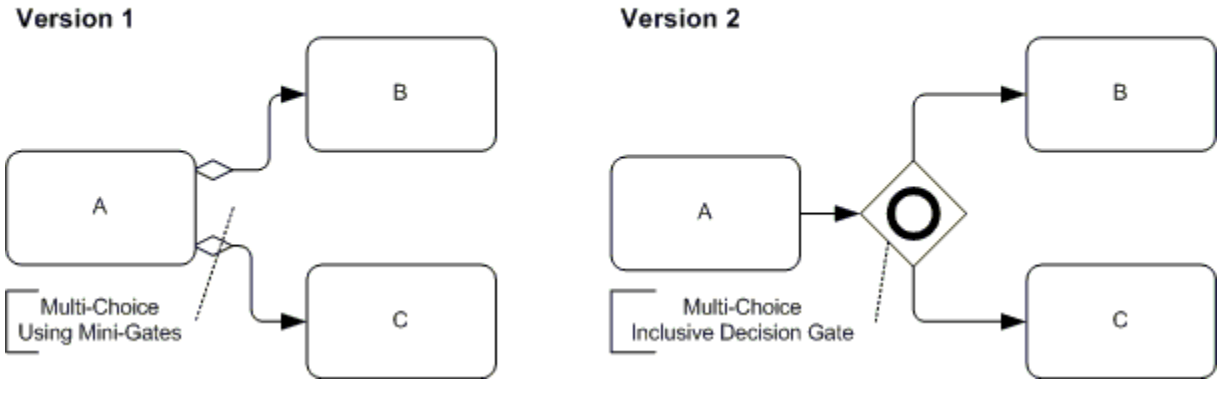
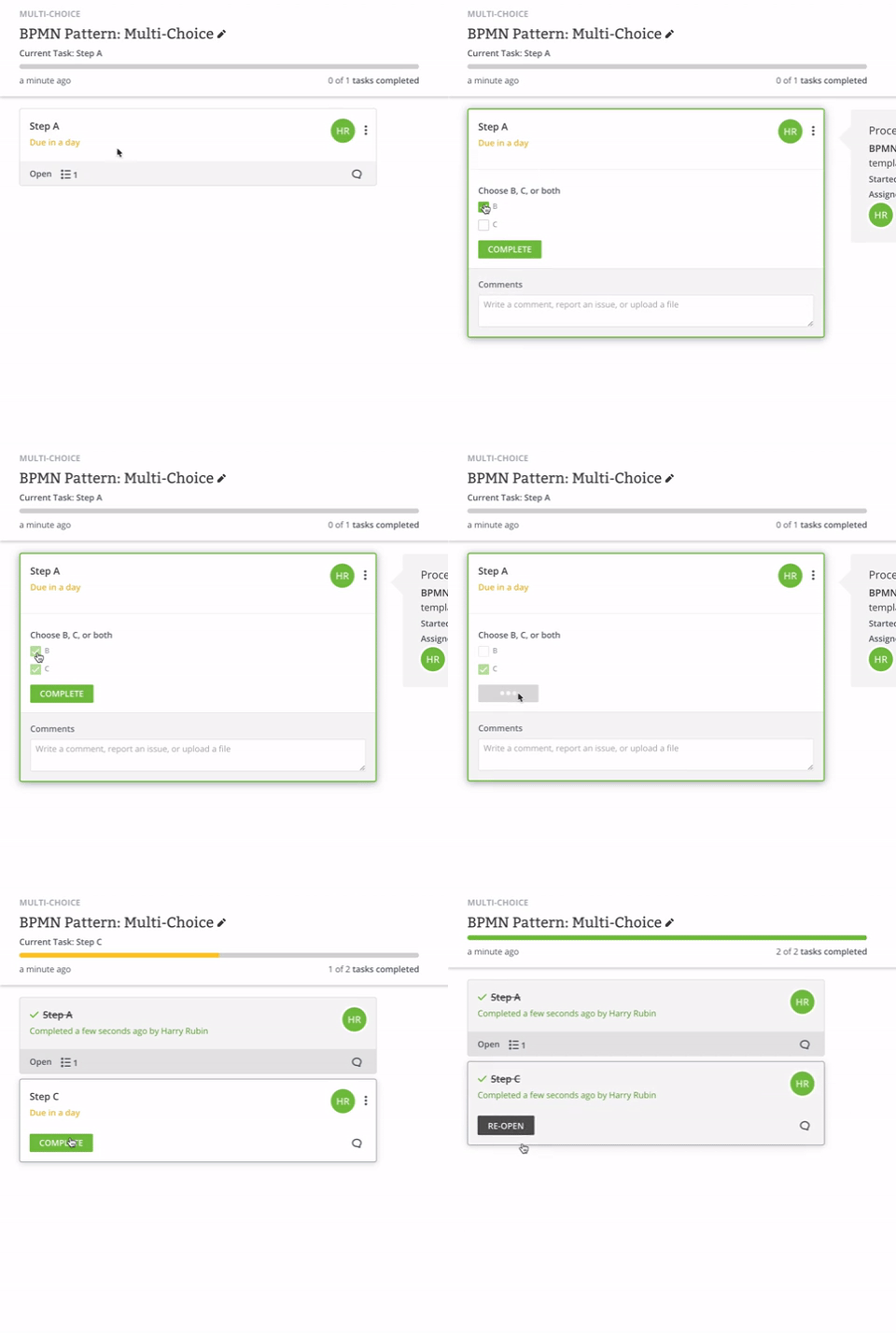
A decision made in task A leads to either task B or C.
Equivalent of pattern in Tallyfy
(V1) If task A contains B, show task B. If task A contains C, show task C.
(V2) A choice of either B or C is given in A. If B is selected show task B; if C is selected, show task C.
Discriminator
BPMN pattern description
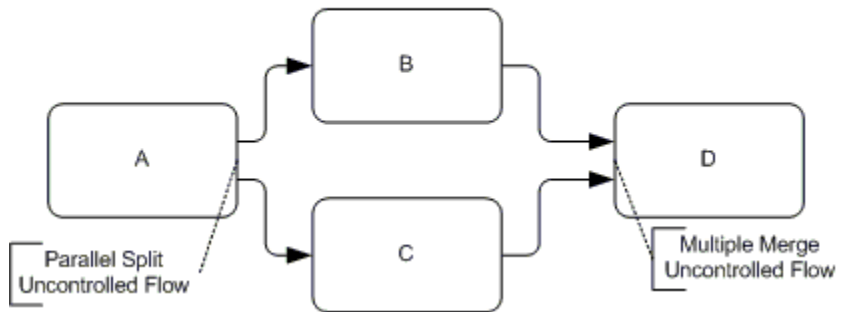
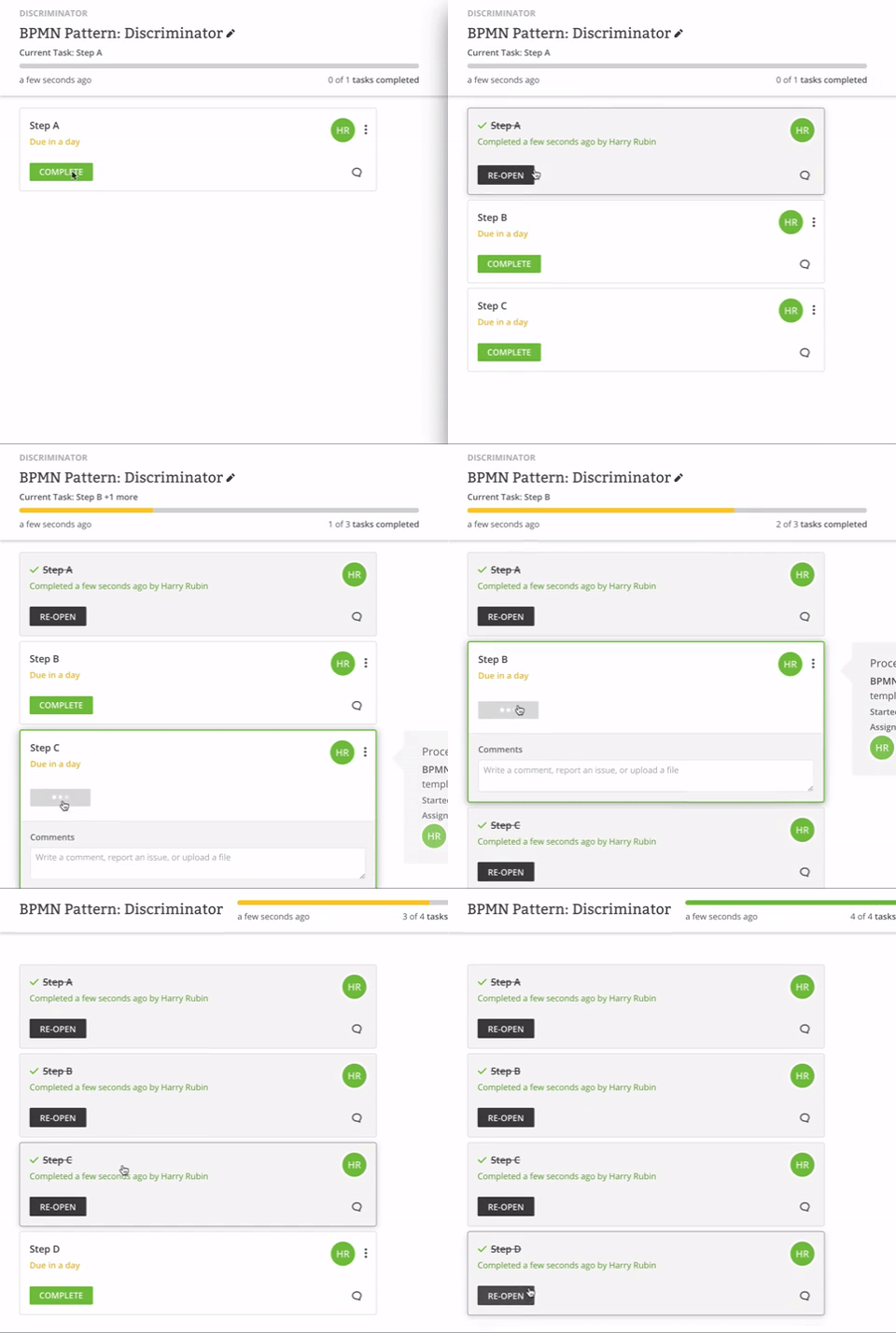
After task A is completed, tasks B and C are to be completed, after which task D is to be completed.
Equivalent of pattern in Tallyfy
After task A is completed, show tasks B and C.
After task B or C is completed, show task D.
N out M Join
BPMN pattern description
After task A is completed, tasks B1, B2, and B3 are to be completed.
When either of the B tasks are completed, task C is to be completed.
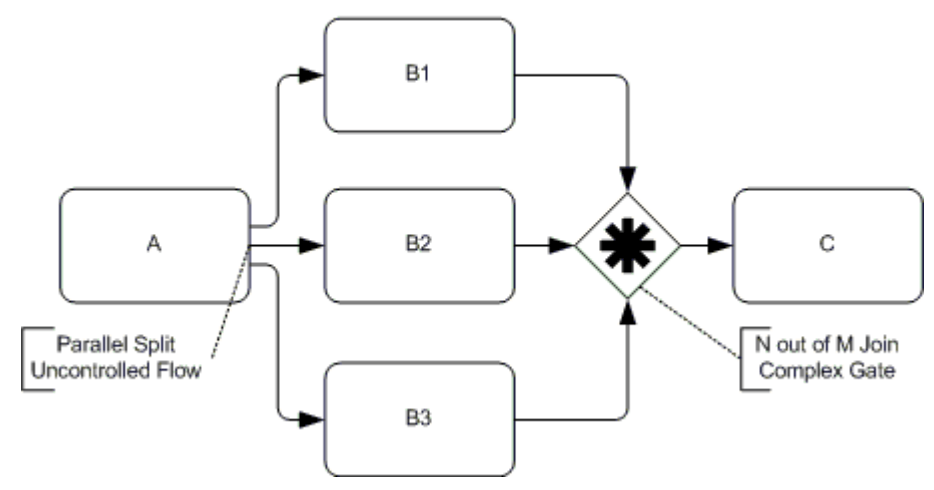
Equivalent of pattern in Tallyfy
After task A is completed, show tasks B1, B2, and B3.
After task B1, B2, or B3 is completed, show task C.
Note on issue - This would more easily work in Tallyfy if there was the ability to create two rules for one task: (when A is completed, show task B1. If task B2 or B3 is completed, hide task B1). We’re working on it.
Synchronizing Merge
BPMN pattern description
After task A is completed, tasks B and C are to be completed.
When B or C is completed, task D is to be completed. (V2) B and/or C.
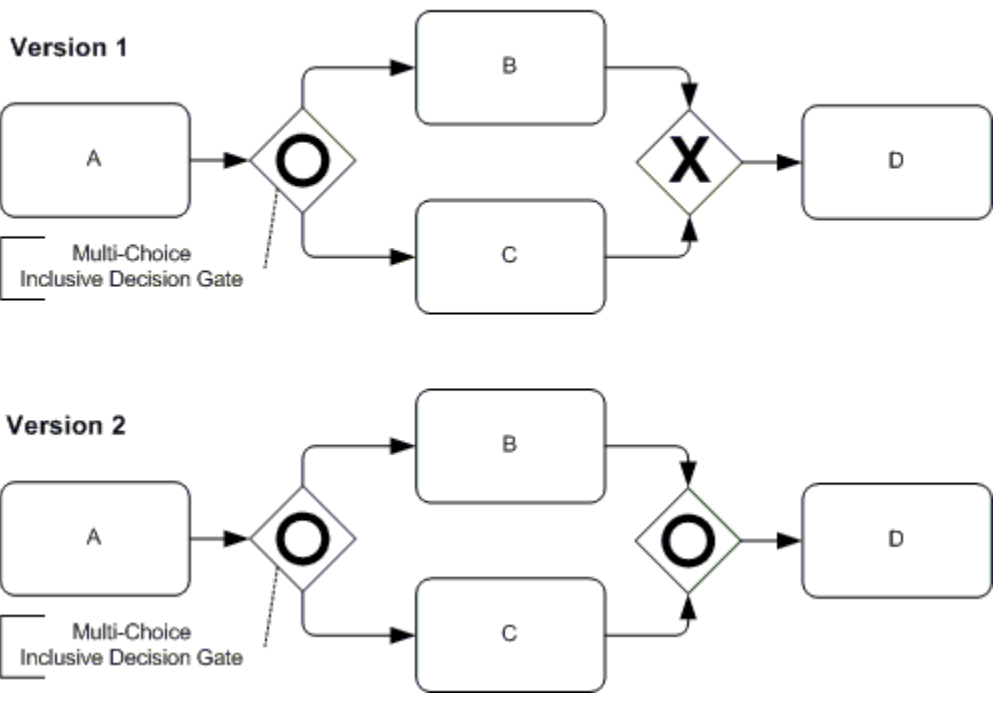
Equivalent of pattern in Tallyfy
After task A is completed, show tasks B and C.
After task B or C is completed, show task D and (V1) hide the other of B or C.
Deferred Choice
BPMN pattern description
After A is completed, depending on outcome of event, B or C will be completed.
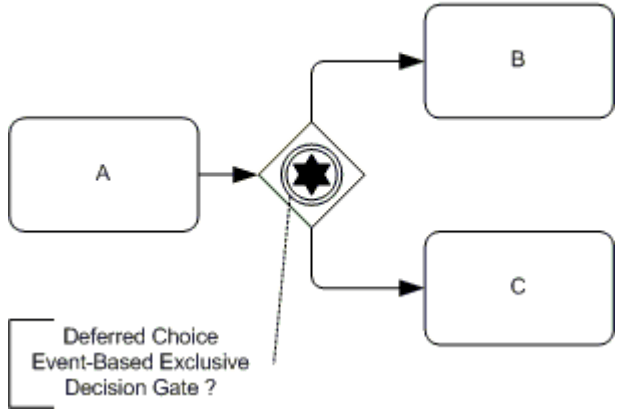
Equivalent of pattern in Tallyfy
After task A is completed, assign task X.
If task X response contains answer B, open task B. If task X response contains answer C, open task C.
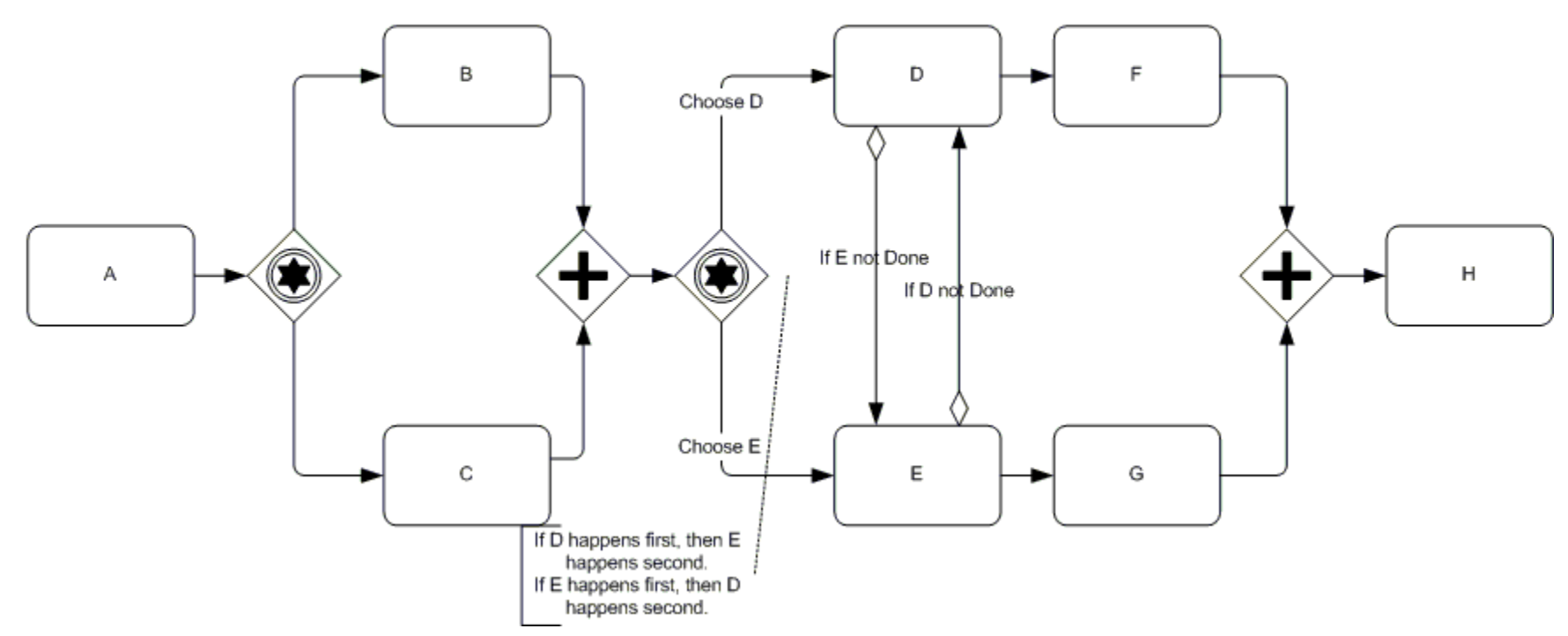
Interleaved Routing
BPMN pattern description
After A is completed, depending on outcome of event, B or C will be completed.
After both B and C are completed, a choice is made between E and D.
If E is selected, E is completed, then D. If D is selected, D is completed, then E.
After D (after E) is completed, F is completed. After E (after D) is completed, G is completed.
After both F and G are completed, H is completed.
Equivalent of pattern in Tallyfy
After task A is completed, assign task X.
If task X response contains answer B, open task B. If task X response contains answer C, open task C.
After Tasks B and C are complete, open tasks D and E.
When tasks D and E are complete, open tasks F and G.
When tasks F and G are complete, open task H.
Note on issue. This does not completely replicate the diagram. To do that, you would need to be able to split a process into two processes, yet be able to have rules that make what happens in process one dependent on process two. We’re working on it.
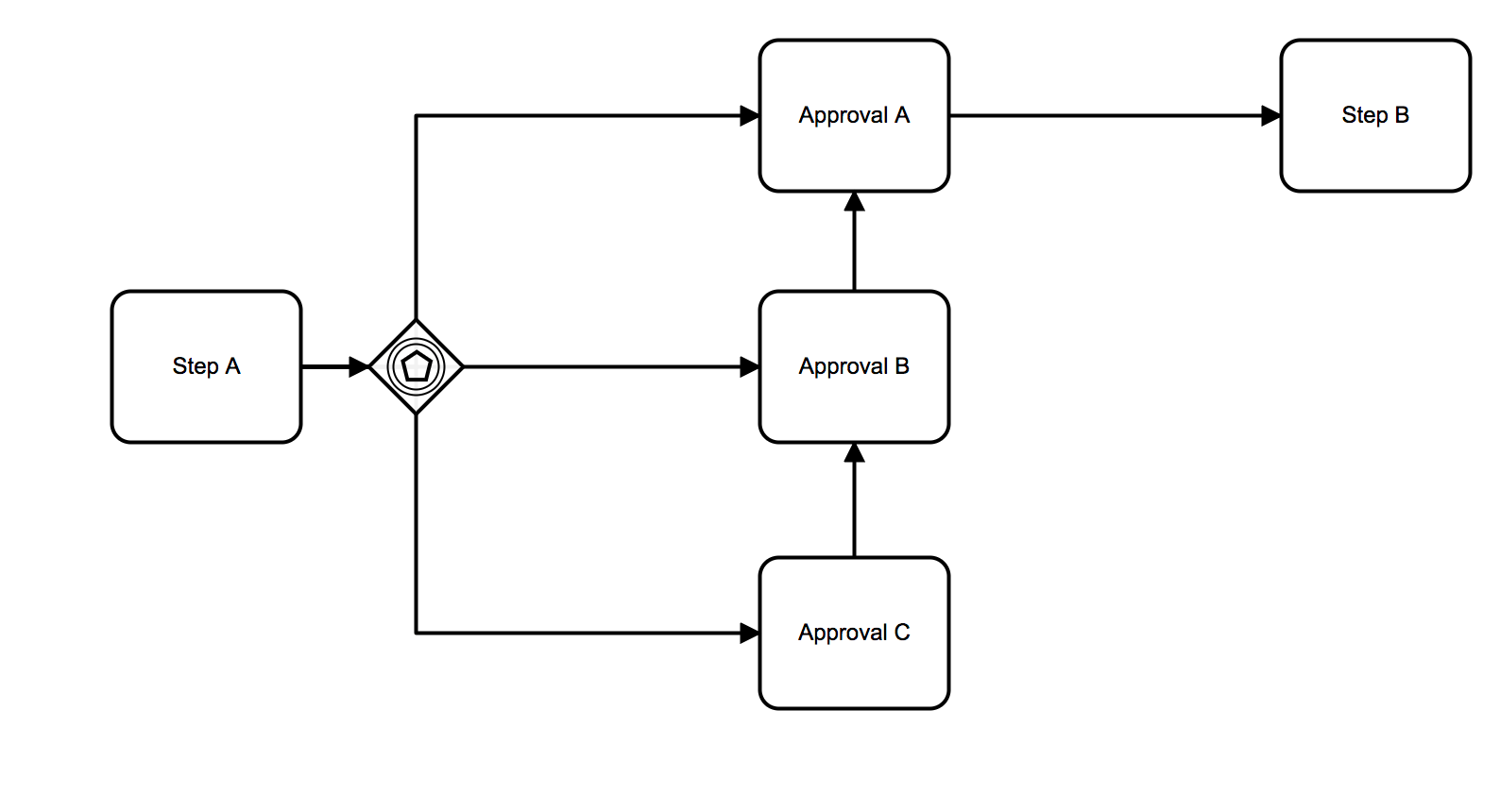
Tiered Approval
BPMN pattern description
Event in Step A has results 1, 2, and 3.
If event results in 1, Approval A is needed before proceeding to Step B.
If event results in 2, both Approvals A and B are needed before proceeding to Step B.
If event results in 3, Approval C is needed in addition to A and B before proceeding to Step B.
Equivalent of pattern in Tallyfy
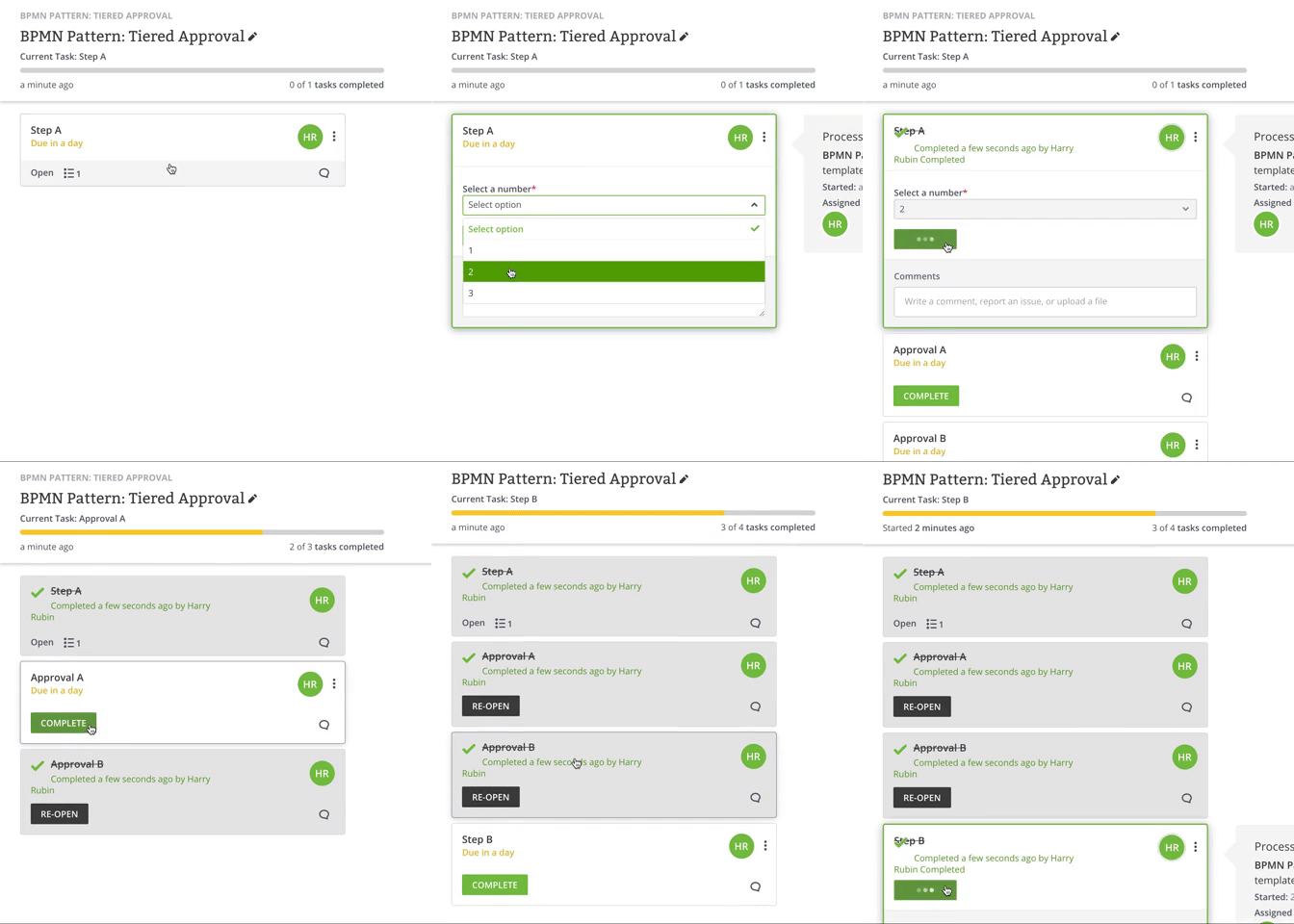
When Step A is completed, open task Approval A.
If step A contains 2 or step A contains 3, open task Approval B.
If step A contains 3, open Approval C.
About the Author
Amit is the CEO of Tallyfy. He is a workflow expert and specializes in process automation and the next generation of business process management in the post-flowchart age. He has decades of consulting experience in task and workflow automation, continuous improvement (all the flavors) and AI-driven workflows for small and large companies. Amit did a Computer Science degree at the University of Bath and moved from the UK to St. Louis, MO in 2014. He loves watching American robins and their nesting behaviors!